Saturday, January 19, 2013

All is not to fair and equal in Intern Nation


I know that blogged about Ross Perlin’s Intern Nation before but after spending weeks interning in Shanghai, I have come to the conclusion that I am what Ross Perlin would describe an Intern Queen.

My reason for becoming such is simple; I chose to study  things that interested me and not areas that had economic value. Being an Intern Queen maybe is the curse of the Arts Grad.

I went through university being told that extracurricular activities (a.k.a internships) were the key to getting a graduate job, especially if you were doing Arts or wanted to get in to an industry that was particularly tough to break into.

As an Intern Queen, I’ve seen all kinds of internships: disasters, structured ones where you learn a great deal, unstructured internships in distant lands that are a whirlwind of experiences that challenge you personally and professionally and, more recently, one that is a combination of most of the above.

I’ve been stuck in a room on my own in the jungle with a boss whose only method of communication was Skype messaging, despite being in the next room. Another was everything that an internship should have been with interesting and challenging work that gave me an insight in to what I was good at as well as an exposure to the area that I was studying.

But from my experience and from reading Ross Perlin’s book, I’m beginning to understand that internships have value and not all internships have the same currency in the job market. I am also aware now from reading Intern Nation that internships are also quite unfair. 

But why do people need to do so many or focus on completing the more prestigious ones in order to get a foot in the door of paid employment in the knowledge economy?

Perlin argues that the reason comes down to ‘“systematic overinvestment” and employers upping the ante: increasingly it takes a prestigious internship or a string of [great] internships, to put you over the top’ (2011, 132)  

This means that while doing several internships is a positive thing but don’t be surprised when employers begin to make it necessary to have done bigger, better and more prestigious internships to get hired.    

The most obvious factor that makes internships unfair is that in many cases you either have to pay for the privilege or have to be willing to work for nothing during your internship. Either way, you have to have the financial backing to be able to participate.

I certainly wouldn't have been able to afford my current internship as an undergraduate and my parents wouldn't have paid for it either. 

But not having participating in internships can have consequences and, as Perlin argues, ‘Not having access to an internship can be the kiss of death if you want to move up in the world’. (2011, 165) It is especially true that not having done an internship can make getting a job so much harder if you have your eyes on the hard-to-get-into areas of the job market.

Perlin quotes, David Graeber who points out ‘It has become a fact of life in the United States that if you choose a career for any reason other than for the salary, for the first year or two one will not be paid. Graeber points out that in many professions – charitable work or literary criticism [even politics, international relations, events and arts management, broadcasting, journalism, international aid and development] for instance – “structures of exclusion” have excised for a long time, “but in recent decades fences have become fortresses”’ (ibid). The building of a fortress has come about from wealthy interns having the done the right internships with the right organisations to allow them entry to this fortress.

But there is another group that also get easy access and this leads into another level of inequality.

A less obvious factor in the inequality among the citizens/“want-to-be citizens” of Intern Nation is the rise of the what has many names but is essentially is the same thing; “Brilliant Young Thing”, “Pretty Young Thing” and “Professional Young Person”.


While this clip is pure satire and completely over the top, we’ve all seen people like this (without pettiness maybe) in the paper being celebrated for their for latest accomplishment, being the public face/voice of “youth” through sitting on every community, government and private business board available, or participating in some high achievement programme.

When it comes to finding a job post graduation, they have collected such an impressive array of experiences and contacts with which no ordinary person can compete. As a result, these Pretty Young Things are fast tracked into the internship programmes that are the red carpet to these hard-to-get-into-professions.

The very existence of these individuals perpetuates a winner-takes-all mentality and our society’s obsession with “Personalities”.

It’s not that these Brilliant Young Things are more qualified than anyone else or necessarily more capable than others it is just that their contacts and public profile get their application from the middle of the pile to being read. Either that or they received an invitation by an employer to apply (along with everyone else) for a programme knowing full well that they will be successful no matter who else applies.  The influence of contacts shows that this worries Perlin when he writes ‘Nepotism, cronyism and the lack of transparency remains the order of the day in filling many internship potions, even as people quietly admit that the situation is out of control’ (2011, 231)   

Correct me if I am wrong here but aren’t the whole point of internships meant to give people practical experience and an opportunity to transition from education to work or between sectors?

Now internships seem to be awarded to those who are already fully prepared to gain work in the knowledge economy rather than those need the assistance in making the transition.  The current system of internships, as Perlin quotes  ones of his interviewees, ‘enables those who have had some enabling’. (2011, 102)  
  
In summing up, Ross Perlin writes in Intern Nation ‘quietly and not-so quietly this “talent myth” has become an underlying justification for massive and grown inequality, runaway executive compensation a winner-takes-all economy and an intense focus on superstars’. (2011, 233) I would love to say that things may change but I somehow doubt that they will! Everyone who isn’t from an uber privileged (financially or socially) background will just have to work smarter and harder to gain a place in the knowledge economy.

Link

Perlin, Ross. Intern Nation: How to earn nothing and learn little in the brave new economy. (London and New York: Verso, 2011)   

Thursday, January 10, 2013

Does travelling broaden the mind or reinforce stereotypes?


Several months ago there was a programme on Australia’s ABC Radio National that discussed why we travel and how it changes our out world-view. This discussion has been at the back of my mind while I planned and embarked on my latest adventure.

It was cited on this programme that one third of Australians travelled overseas in 2011 and with so many of us packing our suitcases and grabbing our passports raises the question of what do we want from the experience and how does it impacts our lives.

The reasons why people go travelling are many and varied, including seeking an authentic experience of being a strange person in a strange land as well as getting that adrenaline rush and feeling of being alive when you’re slightly in danger.

There is also an element of escapism that travelling provides - either from a dead end job, unsatisfying relationships or simply living in a sleepy city where life can go by without you noticing.

Author and writer Kris Olsson comment about life in Australia being ‘wonderful but too wonderful. You can almost fall asleep here while life passes you by’.

While we do have our little piece of paradise, it is good to leave to leave it sometimes and to gain perspective, not only on our own lives but how good we have it as a nation

The question was posed by presenter Paul Barclay to The Griffith Review’s Editor Julianne Schultz, whether the great movement of people will aid understanding or promoting tensions?

Her answer was along the lines of while Australians may get a sense of how lucky they are to living in a country where there is a welfare/heath care system, etc but these realisations have yet to trickle down to the public debate.
    
You can see this with the debate around Refugees and if anyone had been to a developing country, logic would have it that they could begin to understand why people would want to leave their poverty stricken and/or war ravaged country for a prosperous nation like Australia.

But no such luck, not yet anyway.

Paul Barclay went on to discuss the concept of the “Ugly Australian” who extracts nothing cultural from a trip to Bali or the beaches of Southern Thailand.

Image: Facebook - Perth WA Memes

Bali and Phuket being the places where thousands of Australians go every year to do what they’d do at home such as eat, drink and party but at a fraction of the price. It is there that the stereotype of the Drunken Australian is probably reinforced.

Image: Facebook - Perth WA Memes
But for the many travellers who visit Bali might find that they their world-view hasn’t changed much as they have been part of a similar social scene to back home.

Not to mention that their tastes and sensibilities have all been catered for by Indonesians.

This is one of the things that always disturbed me about Perth where many seem blissfully unaware of the outside world and the current issues as well as how good life is here.   

Another thing that disturbed me about Perth was that how the collective mindset is that somehow it is the epicentre of the known human cosmos. Maybe this sense of over importance exists because there is this lack of curiosity about the outside world. 


Image: Facebook - Perth WA Memes

But back to travelling, this radio programme also discussed the distinction between a Traveller and Tourist.

My take on it is that the Traveller is generally the more independent sort who is out for an adventure of their own making and openly wants their views challenged and changed. 


Nima Markets in Accra Ghana


Curiosity rules and wanting to know how others live is of paramount importance. Choosing to going out of their comfort zone and to be slightly shocked and uncomfortable are other signs of the traveller

The meat delivery to Nima Markets, Accra Ghana

Central Accra, Ghana

A normal and totally accepted activity in a Thai Hill Tribe
Image: Kirsten Donnelly


Image: Kirsten Donnelly

Imagine stints working overseas in both the western world and in less developed countries as well as volunteer workeco-tourism, development projects and aid work.  Not to mention completing studies abroad.

Volunteer project in among the Hill Tribes, North Thailand
Image: Kirsten Donnelly


Image: Kirsten Donnelly


Organising their own trip rather than relying on a travel agent and/or peer group pressure to tell them where and how to go is also very important to travellers. 

Tourists on the other hand, head overseas for different reasons. Maybe it’s to escape the mind numbing boredom of a dead-end job or just a change of routine.  Think packaged tours, cruses, nice hotels, Contiki, etc, etc.

But whatever the reason there is an element of searching for the exotic.  Like when Alain De Botton writes, 'What we find exotic abroad be what we hunger in vain at home.' (2002,78)


Travelling does broaden the mind and give you a different prospective on people, countries and the stereotypes. But the key seems to be intention and attitude.

Travel also gives you the space and time to reflect. What Alain De Button in his book on the Art of Travel is so true when he says, 'Journeys are the midwives of thought. Few places are more conducive to internal conversations than a moving plane, ship or train. There is almost quaint correlation between what is in front of our eyes and the thoughts we are able to have in our heads: large thoughts at times requiring large views, new thoughts new places.' (2002, 56)


Wat Rong Khun Temple, Chang Rai
Whatever the reason, travelling is so rewarding as there is so much to see and do. Travelling is especially cool when you mix it up and combine being a tourist and an independent traveller.  This way you can get the best of both worlds – eye opening and life affirming experiences, adventure as well as relaxation and recreation.


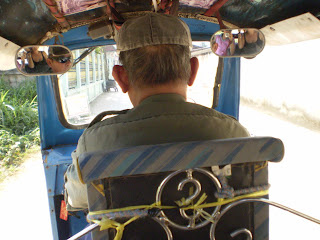
Riding in a Tuk Tuk in Chang Rai, Thailand


Links

De Botton, Alain. The Art of Travel (London: Penguin Books, 2002)


Tuesday, January 1, 2013

The citizens of Intern Nation raise the alarm

I have just finished Ross Perlin's Intern Nation (how to earn nothing and to learn little in the brave new economy) as I am setting out for an internship in China. It was a sobering experience, considering that I am doing what Perlin would a complete waste of time and resources.

One of the problems that Ross Perlin has with internships is that society (including business, fashion, entertainment, NGOs, the education sector and governments) don’t really understand what internships are and that leaves people open to exploitation and abuse.

He gives many examples of internships that are unpaid and give the participant few opportunities for skills development or exposure to the key business of the organisation. He argues that internships are often touted as nothing more than an introduction to a shallow culture of an organisation or industry.

He regards this concept of exposure as being problematic when he says, ‘anything that bring “exposure” can now be a learning experience – flipping burgers for Disney, having a chat at the water cooler, spending an afternoon  at the copying machine’ (2011, 94). Unlike medical internships or “Articles” for newly graduated lawyers in the legal profession, without a tradition of providing real structured training to graduates, many interns fail to get the great learning experience and student-to-professional transition that they were hoping for.

Because of the misunderstandings surrounding internships, Perlin believes that their vague and unstructured nature allows both employers and interns to spin them to suit their own agenda.

Part of an employer’s agenda may often be to save money. This point was a major part of Perlin’s book and looks at the common trend of replacing paid staff by interns and it became clear that in this current economic climate with companies cutting back on staff, in many circumstances internships are used as cheap labour.

So what usually happens is that employers might spin an internship out to be this great learning experience but actually it is just doing the “grunt work” that is usually done by a paid employee because why pay someone to do it when you can get an intern to do it for nothing? Saving a salary just by putting a positive spin on the internship!

The intern on the other hand, might have fallen for the spined internship and, having realised that they were conned, continue the cycle of spin and writing it on their CV in a way that makes it sound better than it is.  

Despite the book being a reality check of the world of internship that I am currently engaged in, I thought it was a good analysis of the problems of unpaid programs that aim to assist you transition from university to the world of work. 

However, author Ross Perlin failed to dedicate enough time on why people sacrifice so much to do unpaid internships even if they offer so little in return. 

It was only in the 'afterwords' where he discussed the decline of employers willing to take new graduates (or even school leavers or career changers) and train them up rather than what usually happens now where they choose to hire people with lots of experience. Perlin notes that ‘unlike the “ageism” which affects some older workers, the closure of the workplace to young people without “experience” has become absolute and systemic, the disappearance of the entry-level job a primary symptom. The paradox of raised in Intern Nation remains unanswered: how do we get experience if we don’t already have experience?’ (2011, 227). His offers few alternatives and what he does offer, as we shall see later in this blog is simplistic and naive.   
   
The demise of the entry level job has also lead to more competition for positions further up the career ladder and therefore if you have just finished university and there a few opportunities available to get a foot in the door and learn to apply your "trade". So you soon realise that you have to do something such as internships as an attempt to address this problem of gaining experience and to give you an edge in an uber competitive job market. 

This is why I have chosen to pay a sum of money to intern in China, so that I may address a regular complaint by potential employers that I ‘don’t have enough experience’.


Internships, I am promised, are the key to getting the experience required to land a job.

So, why to people still fall for them?

Perlin cites, Economist Greg Caplin’s argument: ‘you get paid what you’re worth, and when you start out you are not worth very much. You’ve got to invest in human capital. People are willing to work for nothing because they are going to get a huge pay off in the future’   (2011, 128)

If you have little experience and employers are not willing to give you the foot in door that you need, what else are you going to do other than pay for the privilege to work unpaid in order to get some experience behind you?


Perlin sums it up well by noting that ‘applying human capital theory to internships at least allows for a guarded optimism: students and their families may feel compelled to invest heavily in education and skills-building, but they are rewarded in the end – hard work always wins out.’ (2011, 129) It is human nature and that people want to hold on to something and hope for the best.

With the job market not so kind to those without work experience or access to polished “personal spin machines” people put all their hope in to something that will help them to signify that they can do the job.  


In regards to my adventure over the next six weeks, I am sure that Perlin would not approve of what I am doing. He would tell me to ‘Figure out how to turn a job at the mall into something with a future: talking honestly about your ambition to your supervisor, interacting with customers, pressing for better work conditions and career advancement. Strike out and develop a new skill – whether   it’s taking a Spanish class or learning from a friend how to fix cars – and turn it into a career opportunity.’ (2011, 205).  While it is important not to devalue working in the local shopping centre or taking an evening class but I don’t see this advice working for those new grads wanting to gain employment outside the area that they used to fund their university studies.

While doing jobs to pay the rent and working on informal projects with friends are the catalyst of developing a large number of skills but in this day and age I doubt that they have much value in the job market. With so much emphasis on, not only on achievement and developing an impressive portfolio of experiences but also the charisma to make this collection sparkle like a football field of diamonds, the everyday experiences like doing a job to pay the rent, raising a family or helping out in your family’s shop doesn’t have the same level of impressiveness to potential employer.  


Internships have also crept into the world of volunteering. With the students everywhere wanting to get ahead, volunteering has lost its value in the market. Once volunteering with the Red Cross and the RSPCA was an indicator that you were motivated and a team player or being a leader in your local Girl Guides highlighted your leadership and interpersonal skills but nowadays this is not enough. For a good example of this check out this site.

As a result, organisations now promote volunteer placements as internships so that they attract students who are desperate to take part in activities that show that they are motivated, keen and capable.

You can see the debate played out in the America where spending the summer as a camp councillor is becoming seen as time not as well spent as spending the same time interning.  Just click here and here

People end up doing internships because they perceive them to having currency in the job market even though in reality they might not.

But as I leave sleepy old Perth for the big smoke of Shanghai, I hope that this internship doesn’t turn out to be another empty experience but an intense learning encounter that I’ll remember for a lifetime.

Link
Perlin, Ross. Intern Nation – How to earn nothing and learn little in the brave new economy. (London and New York: Verso, 2011)  


Wednesday, December 5, 2012

Old but not passé

I don’t know if you’ve noticed but there has been a bit of a renaissance in Perth of late.

When I first arrived here in Perth almost 20 years ago (seriously, has it been that long?) many of the older buildings were empty. I found this a little sad coming from a country where many old buildings were still used and admired. 

But as I soon realised Perth, with its superficial attitude and effervescent lifestyle, always favoured the new over the old.   

All of a sudden in the past 18 months or so, many of Perth’s “Old” buildings have been given a face lift and new lease on life.

What started this renaissance seems to have come from the building of another office tower in Perth’s CBD for recourse giant BHP Billiton and of course, they needed somewhere to party.


So what better place than to use the old buildings directly at their feet? These lovely buildings used to accommodate The West Australian Newspaper (including its Print Hall), The Perth Trustee/Insurance as well as the Perth Technical College and Old Boys School.  


The redevelopment of these beautiful old buildings has given us a new precinct that is very cool.

It is this here where you can also find a room top bar (very appropriate, given Perth’s weather), on top of the appropriately named Print Hall with its four floors dedicated to fine dining and sophisticated New York style entertainment.

Along the Terrace you can find The Heritage Restaurant. The Heritage is truly amazing with its Belle Époque theme transporting you back to pre-war Paris.

Its great atmosphere, food and service making it ideal for those special occasions when you’ve got something to celebrate or just want to enjoy the finer things in life, even if it leaves the credit card begging for mercy.  


Next door is The Trustee, with its Art Deco theme is equally as suave.
 
The only gripe that I have about this area is that the outdoor area seems a little windswept and devoid of energy or personality. I wonder how long it is before we could have a jazz trio playing or a solo Sax dude filling up that empty space and drawing people out from the various venues.

Of course there are a few other places around, like Bar LaFayette or Bobéche which are smaller, quieter but no less sophisticated or cool. 

These buildings also accommodate a coffee shops and vintage clothes shops as well as (with their large windows providing plenty of natural light and high callings) an art gallery.


Walking around this gallery made me wonder what it took them so long to start using these amazing spaces. Of course all it takes is one to start off a trend but thankfully there are a few buildings that have stood vacant or underdeveloped for many years that are now being developed into boutique hotels and restaurants.

I hope these buildings remain appreciated well into the future and as the recent developments in Perth show, just because something is old it doesn’t mean it is passé.  The old buildings can sit side by side with the uber new and ultra modern and don’t have to be knocked down when tastes change, unless they were built in the 1960s then go right ahead and pull them down. 


Friday, November 9, 2012

2013 Arts Festival helps Perth to lose its “dullsville” tag

With the weather slowly warming up I am beginning to look forward to all the cool things that summer brings and the Perth International Arts Festival has to be one of my all time favourite events.   

Last night I was lucky enough to score an invite to the Perth Festival launch of its 2013 programme.    

It might sound like no big deal to sit through a multimedia presentation of shows that haven’t yet opened but it was just a reminder of the impact that PIAF has on the cultural life of Western Australia’s capital city.

Perth is one of the most geographically isolated places on earth and in the past the city has been labelled Dullsville on account of its often small town mentality and sometimes ethno-centric attitude.

I've written before on how cool the Festival is but after seeing what the 2013 programme will be, I am sure that next year’s festival will be no different.

The format of the Festival is of no surprise, with a plethora of different art forms such as film, theatre, circus, dance and music - spanning from early music with Carlo Gesualdo, right through to a 110 piece symphony orchestra playing Bartok and a commissioned work by the divisive classical contemporary Phillip Glass and all the way to the world’s coolest blues, jazz and pop shows performing in the Festival Garden.     

There are also plenty of shows for children and families as well as many free events if you are, like me and many others, on a budget.

The 2013 highlights are Bertolt Brecht’s The Threepenny Opera, Sydney Theatre Company’s adaptation of Kate Grenville’s The Secret River and an Australian excusive/premier of the Mission Trip directed by Rachel Chavkin.

There are also shows that cross genres, break the conventions and bring you stories in ways that are unusual.

Mariano Pensotti’s La Marea designed to be performed in various apartments and viewed by passer bys in the street. This will be something not to be missed as drama spills out from the theatre halls and into the street.
 
Another break from convention is the National Theatre of Scotland’s The Strange Undoing of Prudence Hart. This show had a phenomenally successful run at the Edinburgh Fringe Festival and will take places, not at the State Theatre Centre, but among the tables of Little Creatures’ Loft.

The shows that I have my eye on are the A History of Everything all the way from Belgium and Samuel Beckett’s play Watt, performed by the Gate Theatre Dublin.

Circus Rolado’s La Cucina Dell’arte with its vaudeville inspired act that include pizza throwing and plate spinning hilarity will no doubt be a show not to be missed.      

As for the Chevron Festival Gardens, I’ll be there every night enjoying the uber cool atmosphere and the super cool tunes that will electrify Perth’s cultural centre. With its great music and awesome vibe it makes me happy to be alive.   

I love a good Writers’ Festival and this part of PIAF is something that I always look forward to.

Having just finished  All That I Am, I can't wait to  hear Anna Funder speak as well as Margaret Atwood of the Blind Assassin fame.

But we don’t have to wait until February 8 2013 to enjoy artistic creations from overseas.

The Lotterywest Festival Films begins in late November 2012 and continues right through to mid April 2013.

Outdoor movies are a great way to enjoy balmy Perth nights and after enjoying a picnic and a glass of wine, watching movies from all around the globe making it a perfect end to a great night out.

The locations are at the University of WA Somerville outdoor movies and at Joondalup Pines, which is also outdoors. 

Choosing which shows to go to is already proving difficult but I am sure the 2013 Perth International Arts Festival will enrich the lives of the citizens Perth and making our city an exciting place to live. 

Saturday, November 3, 2012

Being single and loving it

Recently I have been planning my annual overseas adventure. Earlier this year it was Ghana and in January 2013 it will be six weeks interning and travelling in Shanghai and India.

During the planning process I have had been so glad that I was single and could peruse my passion for travel as well as study and music without having factor in some else’s interests and work requirements.

While this blog post is not about these adventures in particular but more a lifestyle that is undervalued.

I always found relationships slightly fascinating and especially when romance seems to be touted as the be all and end all of the human existence. 

Especially myths such as that being in a relationship with someone that “completes you” or that it increases the “fun factor” in your life.
 
This is not to say that being married is bad in any way as the joys of being in a relationship are many and varied, but why do single people focus on what they don’t have when being that way can also be so rewarding?

You don’t need to be romantically involved with someone to have rich and rewarding life or to be complete.

There are many advantages to being single, such as:
  • You can live in your own place and enjoy having your own space.
  • You can travel to the far flung places of the globe  or even interstate and take up opportunities that might be little difficult to take up if you had a partner and kids.
  • Travelling solo gave me the opportunity to hang out with people that I met at youth hostels which has been really cool. 
  • Leaving the airport alone in some crazy new city and finding your way to your accommodation provides the most amazing adrenaline rush. 

Another part aspect of relationships that I always found interesting is the tradition of rushing down the aisle by parts of West Australian community.

Spending my late teenage years in a particular social-religious community (of which I am no longer part of) when I first arrived in Australia where marriage is of paramount importance and children are the only indicator of maturity and that you’ve reached  adulthood.

I grew up wondering why this had to be so and why everyone was in such a rush to get married and as soon as it was legal to do so.

I also wondered why single gals in this community who, through no fault of their own, have such a complex about not being joined at the hip with their childhood sweetheart.

It seemed baffling that they put so much pressure on themselves to be married by 19. As if something was seriously wrong with them if they weren't, which was far from the case.

Those who weren’t were just normal people who hadn’t found Mr Right. But the focus on marriage is intense.   

For examples, click here and here.  

Instead of focusing on how good life can be so many seem to focus on what their lives could be like if they were married.

These are just my experiences and I look forward to many years of adventure and excitement, with or without a man! 


Related Posts Plugin for WordPress, Blogger...