Monday, September 19, 2011

Nursing Assistant swaps the province of Perth for the big smoke

When you are not really thrilled about the thought about having to work a dead-end job (because it really is better than welfare, trust me) to pay the bills, you really do get excited about going on holidays. Plus, leaving Perth is always guaranteed to get the heart racing

Luckily, I managed to combine this city break with going to uni (because “I had to go”) and a couple of days of hanging out in the city that they call the cultural capital of Australia with a good friend.


Of course, there are only a few things that are mandatory when visiting this great city. Apart from shopping which I don’t particularly have the patience or the cash for (it is a dead end job thing) but eating, bar and cafĂ© hopping, art and Australian Rules Football are all required activities.

After a long but totally cool day at university, H and I made our way down to the Melbourne Cricket Ground (MCG) to watch the Sydney Swans play the Hawks. Don’t ask me where they were from but they were the ones in brown and the ones that ended up winning. Since I had never watched a game of AFL before (I don’t care if that makes me “unAustralian” as that is so cool with me) it was cool to watch a game in person and especially at the “G”.


The following few days were a blur of eating and drinking many weird but wonderful beverages. The coffee was simply to die for.

All this was punctuated by visits to the art gallery to see some Viennese Art and Design as well as “King Tut” at the Museum and catching up with mates.


Thanks to all that made the trip so special.


Wednesday, August 24, 2011

Could the EU be replicated elsewhere?

Being back at uni there is lots of reading to be done and plenty of issues to get your head around. This week continued to be about Europe (obviously) but it looked at if it could replicated in other parts of the world.
   
In this week's reading I found Richard Baldwin’s article on the lessons that could be learnt from the EU really interesting. It clearly showed that the European Union is very much a product of its history and the EU model of integration could not really work elsewhere.

In Griffith and O’Callaghan (2008, page 99) entry for the European Union they describe its history, starting with the Treaty of Rome in 1958 to the Maastricht Treaty that formalised it into an institution that it is today with its own currency, court of law and Parliament.

But to get to that point and what makes it unique, is really what makes it interesting and shows that the formal structure of the EU could not be replicated to the EU.

The end of the Second World War saw a changing relationship between the government and the people who it was to represent. With the horrors of WWII still in their memories, Baldwin argues ‘Helpless in the face of Nazi occupation and the fact that liberation came only because it suited foreign powers led most citizens to question their own nation states – at least in the context of the European system of nation states that had existed in the first half of the 20th century’ (2008, page 8). What is really interesting is that a country’s experience during WWII influenced their response to the push for a more integrated Europe.

As Baldwin continues to points out, ‘Like the Germans, many Italians were happy to see their Government’s freedom of action constrained by a super national body like the EU’ (ibid) and this was in opposition to the British who strongly believed that their Westminster system of government (among others) was what cemented their place among the allies and not among the occupied.

Considering that it was in this geographical area that saw the development of the Peace of Westphalia that recognised state sovereignty, it seems strange that the European region should give birth to the international community’s first regional institution.

This shows that the institution of the European Union was a response to a unique set of circumstances and period in history. While there are some elements of the EU that could be transported to other parts of the world (such as its immigration system or common agricultural policy, for example), I doubt that we could see ASEAN develop their own currency, legal system and Parliament.

List of References

Baldwin, R.E. (2008) “Sequencing and Depth of Regional Economic Integration: Lessons for the Americas from Europe,” The World Economy. 31(1), 5-29

Griffith, M and O’Callaghan, T. (2008) International Relations: Key Concepts (Routledge: New York)

Friday, July 22, 2011

Feminist literature meets the Parisian life


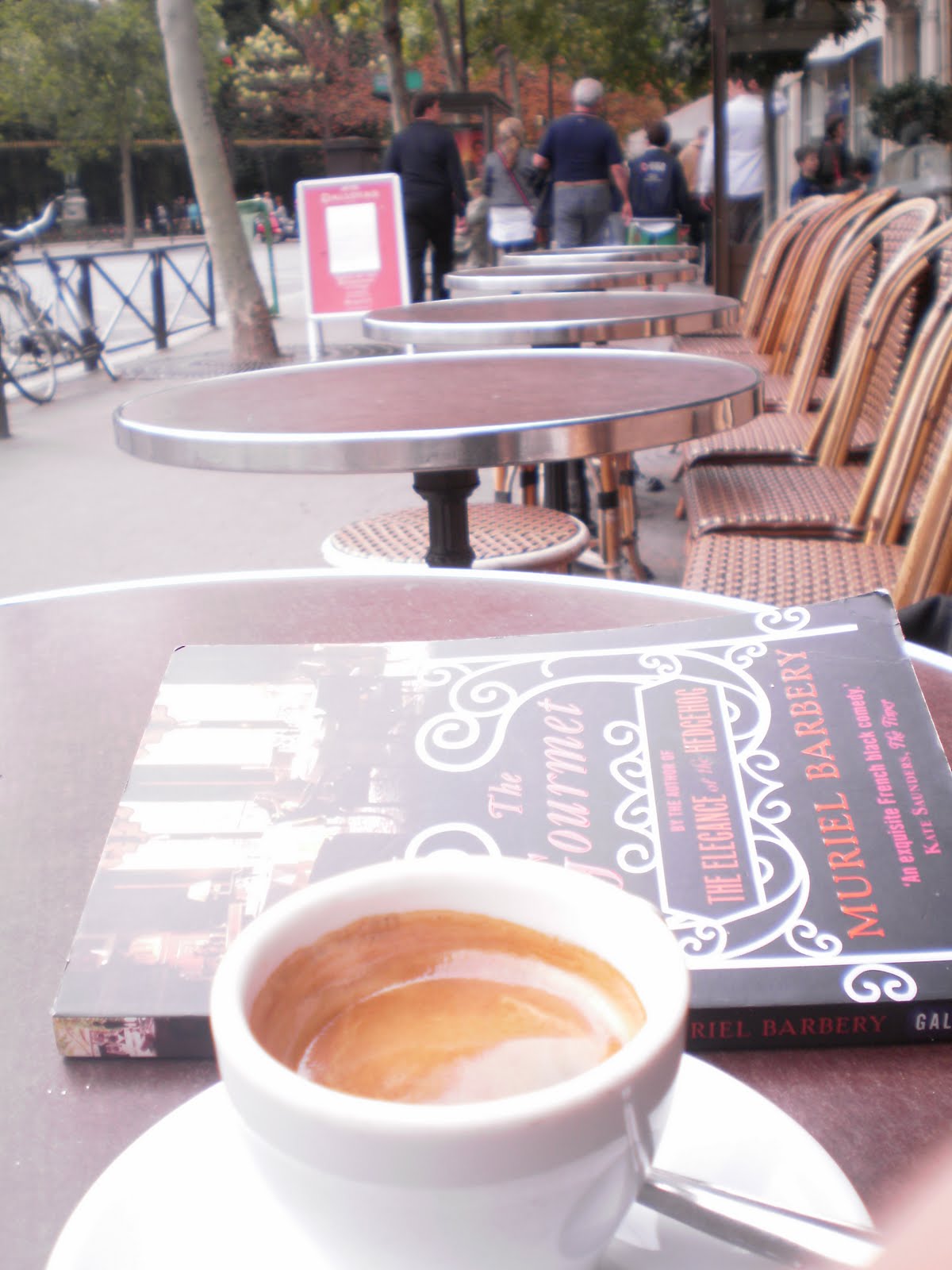
One of life’s little joys is being part of a book club that address those relevant issues. Another joy is visiting Paris and when life doesn’t provide the time or money, reading books about the City of Light is the next best thing.   


not quite but almost!!
The Second Sex by Simone de Beauvoir is my current Feminist Book Club read and a bit of a heavy one. The narrative of women as the ‘other’ reminded me of my undergrad days (sigh) in cultural/gender studies. I was interested by the history of the biology and gender debate that she provides, especially that in the seventeenth century female reproduction was seen as an extension of those of men and reminded readers to separate gender from biology. At 750 pages it will be a challenge to finish it before uni goes back and where the opportunity to read any other than the easiest of novels will be limited.

Paris, je t'aime
The previous book club read was from the Author of why French women don’t get fat, Parisienne Mireille Guiliano brings us Women, Work and the Art of Savoir Faire and it is aimed for young women who want to make it big in business and public sphere.

While a lot of her suggestions are common sense, it good to be remained of the importance of dressing well, the “thank you note” and business dinner etiquette, it doesn’t really challenge the barriers that prevent women from climbing the ladder.


It is as if she’s saying ‘this is how it is and this how you work the system’; it would have been great to have more analysis on how to challenge the system and to make real change and not just how to work within it. For example, in regards her discussion regarding appearance, it would have been great to have some advice on how to be known for more than how we look on the outside.

I found her discussion on the importance of mentoring interesting, especially how women are less likely to mentor than men. Why the reasons for this are many and varied but it reminded me of the EMILY’S List mantra – When Women support Women, Woman Win!!

Florence, I also love you
Ok, ok, Every Day in Tuscany is not Fem Lit or about Paris but would a great book to take with you on holiday or a source of escapism if you are (like me) unable to go on vocation at this precise moment in time. It is brought to us by the same author (Frances Mayes) who wrote Under the Tuscan Sun. A good reminder of the great things in life: food, family, friends and fun!!

Finally, La vie Parisienne by Janelle McCulloch is a beautifully written book about life in this great city. It is a fabulously nostalgic book of such a romantic city that brought a tear in my eye and it's lovely photos that made me want me to hop on the next flight.


There are many books about Paris (especially by Australian Journalists) and, alongside Sarah Turnbull’s Almost French, this has to be one of my favourites. Like Turnbull, she “gets” the city and tries to really understand what makes it tick and especially parts of the city’s iconography.


She writes in some detail about Paris’ obsession with looking chic and concludes that most humans have doubts (to varying degrees) about their existence and too much pressure is put on clothes to make us feel confident, different, sexy or professional. She argues that they have become the brunt of all our insecurities.


I could relate a little to what she calls the “Paris Syndrome”, where outsiders arrive expecting it to be an extension of their romantic ideals while being met by not so pleasant taxi drivers and shop keepers and been surprised by it. But Paris is an easy place to fall in love with and things get blown out of proportion when you get swept off your feet.


I loved the description of her apartment and who cares if it is the size of a post-it note? It maybe small and puny but it is in PARIS. It had a jazz club across the road, a cafe down stairs, and an English book shop around the corner; what more could you possibly want?

Seriously?


Saturday, July 16, 2011

Small book with big ideas urges us to get to work

Get to work…..and before to it’s too late is a small book with big ideas. Linda R. Hirshman makes many excellent points but based around the Western notion of what constitutes “a good life” - using your talents and capabilities to the fullest and being rewarded for it.

Her reason against the relegation of talented and educated women to the domestic sphere is that it makes them dependant on men for money (those who make the most money wheel the most power) and deprives society of skilled and gifted individuals.

I love how she challenges those who “choose” to stay at home with their children. Her argument is that the choice that these women make are from a narrow set of choices as their husbands or partners aren’t exactly going to give up work (income, opportunities to maintain & develop human capital and the chance to use talents) to stay at home.

She is slightly baffled how the most empowered women are often not able to see how narrow their options are at the moment of choice; that there is little discussion about who will opt out of public life to care for a child equally created by two people.

As if to justify their choice, many women cry out that it was “my choice”, but was it really?

While I write this I can hear the voice of conservative and socially regressive women shouting that women monopolize the ability to look after the children, meaning that it is somehow in their DNA to be primarily responsible for the domestic duties.

Shopping, cleaning and childcare have to be done so why not share the responsibility equally?

Hirshman argues that ‘the family, with its repetitious, socially invisible tasks, is a part of life and has obvious and immediate rewards, but it has fewer opportunities for full human flourishing than the public spheres like the market or the government. This less flourishing sphere is not the natural or moral responsibility of women. Therefore, assigning it to women is unjust’. I wonder which part of the Human Genome would the socially conservative pick out as dictating this division of labour.

The automatic assignment of domestic tasks to women is a frustrating one. As I think of the woman that have made a difference in society (in business, civil society, education, entertainment, politics and, dare I say it, religion) I am glad that times have changed enough for them to contribute.

I hope that society continues to change so that there is an equal distribution of domestic duties which allows couples to equally share time in the public and private sphere because their lives will be richer for it.

Thursday, June 9, 2011

Is Perth nightlife getting that little bit swanky?

I must admit that I always struggled to understand why people could ever put “fabulous” and “day out in Perth” together in the same sentence. Maybe because I have been comparing it with our cooler eastern states cousins and overseas relatives who seem to have it all.

Perth is generally known for its effervescent culture that seems more plastic than real but I recently asked myself if the night life in Perth is changing slowly and getting that little bit swanky.

One example is Helvetica (down Howard Lane) which is a Melbourne import and hidden down a laneway. I not only love it because it shares it's name with the mother country but also because of its small intimate feel that doesn't make you feel as if you've just descend into the gutter.


Balthazar (6 The Esplanade) is around the corner looks like something out of SATC and where you expect Sam, Miranda, Charlotte and Carrie to walk in at any moment. It is well worth the visit if you want amazing dishes (with an award winning wine list to boot) and great service.

Going up the Terrace and towards Parliament House, Bar One is a good one for cocktails but nearby Box Deli is even better.

Box Deli, with its cool funky vibe, can only be described as a gift to us from NYC. It does every cocktail as well as Tapas and would be a great place to hold a function or a birthday party that you wouldn’t be embarrassed about in the future.

Of course, Must Wine Bar in Mt Lawley is a must visit and well worth it.


Perth is getting a little bit swankier and especially with inspiration from Melbourne and New York (sigh) City but it does have a little bit to go.


So enjoy the cocktails and live in hope that one day Perth could be as funky and fabulous as any of the great cities on the face of the planet.


Sunday, May 15, 2011

Nursing Assistant spends weekend at Labor talkfest


The West Australian Delegation

After a few weeks in a new job I decided that it was time for a weekend away and the National Labor Women’s’ Conference in Brisbane was the perfect excuse.

All it took was a “Red Eye” flight (after a late shift at work) to propel me from one side of Australia to the other in a little under 5 hours.

This conference was a celebration of the women who make and have made a huge contribution to Australian society as well as discussion of the major issues facing Australian women today.

Thankfully, it didn’t turn out to be a bra burning and men-hating event that get associated with feminist activities but one of the big things that I learnt over the weekend was to separate men from the patriarchy.

For example, in 21st century we still live in a patriarchal society with many inequalities. Women are still paid 18% less than men and the number of women reaching senior management does not reflect the number of women in the private and non-government sectors and that more than half of people graduating from university are female.

At the domestic level, women are still expected to pick up most of the household duties despite also being employed.

One of the most interesting discussions at the conference was around why so many Generation Y women have negative connotations of feminism. Many of the answers we already knew but hadn’t spoken publicly about.

For example, it is common for gen y girls to think of short haired, loud angry women who hate all men and whose goal is for guys to do all of the house work and child care duties.

But what is sadly missing is a fight against this stereotype and not more of an appreciation of what feminism has done for women, little by little, over time.

It is the little things that we now take for granted, such as the right to vote, not having to give up work when we get married and not have to have the permission to get the signature of our husbands/fathers to open a bank account and acquire a passport.

There is also an absence of understanding of the challenges that are still before us.

Gen Y girls have grown up as equals to their brothers and they are told that they can do anything but it is when it comes to making in the professional world that the challenges start. For example, there are increasing problems with negotiating maternity leave and opportunities for advancement.

After this weekend I am more hopeful for the future. I am sure that one day in the future women are able be paid the same as men for the same day’s work and that men take on more of an equal share of the domestic responsibilities.

Friday, April 22, 2011

2011 summer reading continues well into autumn

With Autumn defiantly under way, summer reading should have been finished but I was on a roll and the more I read the more I wanted to read... 

As Catcher in the Rye is on many of the “must read” lists and I thought that it was time that I checked it out. It is a story of a boy that gets thrown out of high school and spends what seems like forever partying in NYC. I was slightly disappointed as I obviously didn’t get why people found this book so compelling because, as a piece of literature, it is no big deal. But understanding that art never operates outside the context/culture that it was created in, it is easier to see the impact of this book and to see how its perspective was a new one. The character’s spent four days plus ranting on how bad his life was and fake the people around him were and I guess that at the time, things like that weren’t really talked about. It is hard to see him as the first anti-hero and rebel.

The Nine Parts of Desire by Geraldine Brookes discusses Women in Islam and provides a close up of the lives of many women in the middle-east and as with other similar books I was left not knowing what to think about one of the world’s largest religions. I shared Brookes’ struggle with why well educated women give it all up for marriage Saudi style and why a whole generation of females could regress back to fundamentalist Islam after the progress of many of the trailblazers of the past but maybe I am missing the point!

“All happy families are alike; each unhappy family is unhappy in its own way” is the opening line to Anna Karenina by Leo Tolstoy and indicates that it is about unhappy families. It is essentially about the scandalous family lives of the Russian elite and how these scandals impact on the families around them.

Prior to reading the book, I had this expectation that this book would only about superficial aspects part of the lives of the characters but I was quite surprised by how human it was. For example, Levin’s and Kitty’s reaction to their brother’s death brought a tear to my eye and their reactions during their wedding ceremony were believable. The end I found a little disappointing and too existential but I am glad I did make it that far.

Its length does make it a big read but it is worth it.

Tolstoy seems to cram quite a lot in to 800+ pages and covered application of Christian values to every-day lives, the role of women in society and societal expectations. It also covers agronomy and early forms of sustainability, industrial relations on farms as well as suicide.

George Orwell’s Animal Farm was the final book of the summer. Having loved 1984 I loved Animal Farm’s allegorical style and Orwell’s depiction of the pre war Stalinist era. I thought it was an accurate depiction of human nature and how political theories begin as positive change but soon go downhill as greed and self interest increases.


I loved the various characters in the book; Millie could easily be a Barbie on four legs and Squealer could be a spin doctor. I laughed when pigs started walking on two legs and their mantra "All animals are equal, but some animals are more equal than others” is so true.

It is easy to see why this cleverly written book is considered such a classic as it says so much about humans and how we organise our selves.

The Plantation by Di Morrissey is a tale of family secrets and dramas. It is a story that covers several generations and it was set in Malaysia (or Malaya as it was known in the past) as well as Australia. It is a very easy read while keeping readers guessing of why things happened the way they did right up to the very end. It did make me want to go back and explore more of Malaysia. Note to self: book trip to Malaysia ASAP!!!

Friday, April 8, 2011

Friday on my mind… where to go on a Friday night in Perth?

If you are anything like me all I want to do when Friday finally comes around to kick back and hang out with friends. Deciding where to go and what to see can be of a little challenge, so these are a few suggestions.

The Greenhouse bar on St George’s Tce provides a good place to meet fiends if you want something super central (with its agricultural exterior makes it hard to miss) and informal.

It's commitment to sustainability gives the place an unusual vibe (make sure you visit the toilet) and while they have a good selection of wines, beers and food, it is a bit expensive.

Across the road on the corner of 111 St George’s Tce is one of Perth’s newbies that seems to be always full but not so good if you don’t want to compete with the suits or have a conversation.


Greenhouse on Urbanspoon

If you haven't visited Wolfe Lane you must do so NOW......It is so cool that it is worth the walk. It is hard to find but it is awsome. Think Melbourne, New York, we're all good!!

Wolf Lane on Urbanspoon

After having a quick beer, it is time to move away from the river and towards Northbridge for dinner and a few more.

Moving right along past bogansville-by-another-name and over the train line, slow down when you get to the State Theatre Centre.

You can either stop off at Penang or move on elsewhere depending on your tolerance to uber cheap Malaysian food made in Australia….. it is just doesn’t taste the same.


The Bird is a relatively new music venue which seems to have been transported right out of New York or San Fran with its small bar plus a funky courtyard out the back. They really do have variety of acts because some are better than others but I guess that’s what makes it so cool. It is open from 12 noon till 2 am.

The Bird on Urbanspoon

Moving right along is Ezra Pound is another small bar (minus the music) that seems to have been a gift from our cooler eastern states cousins. Has a good selection of beers and great décor. You can also sit outside at tables and admire the graffiti art.


Ezra Pound on Urbanspoon

If you are feeling a little hungry, you can, at this point, enjoy a burger at Jus Burgers which a burger fast food chain that is cooler than maccers. Enjoy the funk!!

Crossing James St you are met with typical Northbridge fair with the Brass Monkey, Universal (which does music and $10 cocktails) and the Grapevine. They are average and often quite full and if mediocrity bothers you, you might like to go elsewhere.


If Jazz is your thing, grab a couple of mates and head down to the Ellington Jazz Club. The Ellington is a performance space (plus a great bar on the 2nd floor) that has a smoky “New York, New York” vibe, so grab a drink, kick back and enjoy the show.
Hope you had a good night.


Tuesday, March 8, 2011

Giving up bad coffee for good

Coffee is a wonderful liquid.

While it is possible to get your hands on an excellent cup of coffee relatively easily in Perth, you just need to know where to go as it common to be served an awful cup.

My logic is that if you are going to damage your kidneys by drinking coffee you might as well do it with the good stuff.

This blog is all about knowing where to go for a superb cup so that you may give up bad coffee for good!

I obviously love the taste but what keeps me going back for more (apart from the addiction) is what it represents.

Having a cup of the blessed cup means chats with friends, taking a seat and watching the world go past and catching up with the papers. It also means getting a much needed energy boost before a shift, study session or social event. I also love the vibe of cafes and below are some of my favorite cafés in Perth.

King Street Café (number 44) is a Perth institution and one that introduced me to coffee. It serves fine food, wine and cakes. Their coffee is very good but depending on which barista is on it is sometimes less than superb. Its location makes it a good spot for people watching. It shuts late and gets very busy during ballet and opera.

Oh and another thing, this café does not accommodate children so out of courtesy for others, please refrain from bringing your ankle biters with you.

Any children that do enter will be given espresso and a free kitten!

Zekka is down the road a little further towards Wellington Street. It is a court yard at the back of a trendy shop and reminds me of the Melbourne lane ways as well as the (supposedly) methadone alleys of Surry Hills in Sydney! While having a great standard café menu, their coffees are regularly perfect. The only criticism is that it shuts at 1500 or 1600 hrs.

Going on a tangent, what is with Perth CafĂ©s shutting at 1600? Seriously, am I the only person needing coffee after this time in the afternoon? Welcome to dullsville I guess.

Around the corner from Zekka and Kings Street is Tiger, Tiger and it is a truly a wonderful place that pulls the artsy-fartsy set. It is a groovy venue down a little a laneway (Murray Mews, off Murray Street) and must score 10/10 on the vibe scale. It consistently serves great coffee and one of the few cafés where you can have a glass without buying food. It did a great Mulled Wine one winter a few years ago and hopefully it should make it on the menu when the weather cools down a bit. It does get packed on Friday night with the after-work-drinks crowd so be prepared to share tables.

Moving right along to St George’s Terrace, Jean Pierre Sancho’s Boulangerie Patisserie is at number 111 and well worth a visit. This is an authentic French outfit that serves truly magnificent pastries and cakes, plus coffee isn’t of a bad standard. It is so authentically French that ordering in French seems to be almost expected. Its closure at 1800 is the only thing that is not authentically French. They use organic and, from memory, Fair Trade Coffee which is a total bonus.

Jean Pierre Sancho on Urbanspoon

Going out to the suburbs is well worth the effort and especially when BouBar (Hampton Road) is concerned. This is a great funky joint that is popular with the med student mob, general uni crew as well as the odd retired opera singer and Nursing Assistant. Again, they do regularly great coffee that would sort out any post-work/pre-study energy slump. I love their cold coffees!!

Boubar on Urbanspoon

Fremantle just south of Perth is a firm favorite especially when it comes to the Coffee. The famous Cappuccino Strip is full of restaurants and cafĂ©s to meet the needs of the hungry and under caffeinated. Gino’s probably the most iconic, which it’s prime location (good for people watching) and “Latte Hippy” regulars. Great coffee and cocktails makes it a cool place to meet up and caffeinate before rocking on.


The Coffee Club, say no and walk away!


There also a few Espresso Bar type places which are awesome and are proving to be very popular. There are several down London Court who pump out superb coffee while playing great music.

Giving up bad coffee for good in Perth is easy if you know where to go. The above cafĂ©s are just a few of Perth’s best Cafes.


Friday, March 4, 2011

Are Teach for Australia teachers remembered for all the wrong reasons?

You never forget your best and worst teachers.

These individuals seem to have a massive impact on the decisions we make and continue to influence our lives a long time after we have left school.

I’ve always been envious of those who can teach and sometimes wished that I would be that way inclined. I especially admire those who seem to have the innate skills and true calling to teach a room of kids who don’t always want to be there.

It takes such a special person to be actually good at teaching and so many end up in this noble profession who should be doing something else.

Having recently visited the Teach for Australia (TFA) website by accident, my concern with this programme is that the Teach for Australia teachers being remembered for all the wrong reasons.

There is high praise for this programme in that it gets the crème-de-la-crème into a profession that, despite its importance, is seen as not as good as law, medicine or engineering.

But is this really an answer to assisting schools in meeting the needs of disadvantaged students?

My first reason for concern is that the children in the most disadvantaged schools need the best trained teachers with the most experience and not graduates from non-teaching discipline with only 6 or so weeks of training behind them.

The level of training is a common criticism of TFA.

Katrina Morrison and Laura Tiernan wrote an article in September 2009 has quote Laczko-Kerr and Berliner (both are vocal critics of Teach for America and authors of many papers on TFA) who argue that Teach For America teachers produced 20 percent less academic growth a year than graduate teachers with full certification as well as lack the training in class room management and adequate understanding of fundamentals of teaching.

Morrison and Tiernan later cite ‘Jonathan Schorr (1993), a former TFA teacher, describes the inadequate training and preparation that he and other TFA teachers received prior to being placed into schools. He notes, ‘just eight-weeks training is not enough for teachers’. Schorr admits, ‘I was not a successful teacher, and the loss to the students was real and large’

Courtney Trenwith argues in a Brisbane Times article in February 2010 that ‘Queensland parents and teachers this morning labelled as "inadequate" a new national initiative that would have teachers leading classrooms after only six weeks of training’

As Kristi Eaton argues, in her on article on Teach for America dropouts, ‘though some TFA corps members ultimately succeed and find the experience valuable, some corps members are unprepared and ill-trained for the challenges they face as a teacher’.

Secondly, why is it that when you mention “best and the brightest” that people suddenly start becoming interested in something?

For many years now, the number of people applying for mainstream teaching programmes has gone down but it is strange that when a teacher training programme markets itself as attracting the best and the brightest that they receive many hundreds of applications.

Thirdly, the TFA website states that the programme allows participants to discover their strengths and in what way they can contribute. TFA also offer extensive opportunities to move across to industries other than education.

With 40-50% of Alumni going on to work in the public and corporate sectors, in particular law, commerce, engineering and public policy, TFA sound like a professional gap year programme rather than a strategy to increase the number of teachers working in disadvantage schools.

Would you be happy with this figure if you were funding a programme that aimed to improve the educational outcomes of disadvantaged schools and 40-50% of graduates went on to work in other sectors?

We can only wait and see what the benefits of this programme will be. I hope that participants are planning to become teachers for the long term rather than seeing Teach for Australia as a gap year opportunity and a foundation on which to build a corporate career.

After all we wouldn’t want to see TFA teachers being remembered for all the wrong reasons. The world has enough teachers who don’t have the tools to be good at what they have chosen to do. Quality teaching in a disadvantaged school can change the lives of the children that go there and it is a wasted opportunity if teachers who are there are under-prepared and under-trained, however bright and enthusiastic.

Monday, February 21, 2011

To be better read than dead proves to be 2011’s only resolution


Throughout my teenage years I often enjoyed long lazy summers spent reading and this was the goal of the 2010/2011 summer but, as luck would have it, I was required to keep calm and carry on to deal with several of life’s little dramas.  

But despite having to deal with the odd real life drama rather than reading about them in books, I did manage to read several amazing books which often reminded me of what it means to live a good life and these are just a few of them.     

First off the rank was Captain Corelli’s Mandolin I loved so much about this book especially its meandering narrative, eccentric but strong characters that have to go through so much. It does briefly lose its way in the middle but it is an excellent story all the same!!
The Beauty Myth by Naomi Wolfe an interesting and dense book about the pressures that are on women to be defined by their physical appearance. Her argument that women were innocent victims in a society that obsesses on image didn’t convince me, after all it takes two to play a game, but I did enjoy the discussion on psychology of dieting.
It was written in the 1990s and it would be interesting to have a follow up book that looks at the rise of the glamorisation of stupidity (a.k.a Paris Hilton), the rise of “ladettes”, the sexualisation of tweens and ranche culture.


It would have also been interesting to find out her views on "Chic Lit", which by the way, I have avoided like the plage. Only because it is a genre that I find a boring and dull. Mainly because of the weak plots and characters seem to all be the same botox-ed individuals who live shallow lives while obsessed with their physical appearance.


Like Melinda Finch wrote in Vogue “stupidity has been glamorised. People aspire to be like Paris Hilton because she has captured Andy Warhol’s prophetic American dream: free fame”.
Jonathan Franzen’s Corrections is primarily about a family coming to terms with the demise of their patriarch due to parkinsonism, much of the story is about the complexity of this Midwest family and the lives of its members. At first, I was a little apprehensive that I would not enjoy this book with its annoying characters (who later redeemed themselves) but Franzen’s writing took me on a captivating journey without ever having the feeling of being lost or confused and on the rare moments where I was, the clues were only a few pages back.  It is a book well work reading a second time!!!
Infidel by Ayaan Hirsi Ali’s was one of the most amazing books that I have read in a long time. It was an account of a Muslim Woman’s escape from the patriarchal tradition of her homeland to becoming a refugee in Holland. Ayaan Hirsi Ali’s experiences were a good reminder of how hard it is to understand a new and different culture. Her commitment to assimilating into her new environment was inspiring and her story should be read by anyone who wants a new life in another country. I found her ideas on the role of woman in Islam very interesting and it must have touched a nerve if she received death threats. After all, why bother going to all that trouble of treats if she was loose cannon?
Joanne Harris’ Five Quarters of an Orange was an unexpected story that intertwines two period of a lady’s life. It is defiantly an odd book with even odder characters (how did she dream up these people?) but an amazing one all the same.


I love any book that takes me out of my own imitate existence. I seemed to be attracted to books and movies that have a strong narrative and with vibrant and profound characters that over come adversity with hope and dignity and many of these books have done that.
Related Posts Plugin for WordPress, Blogger...